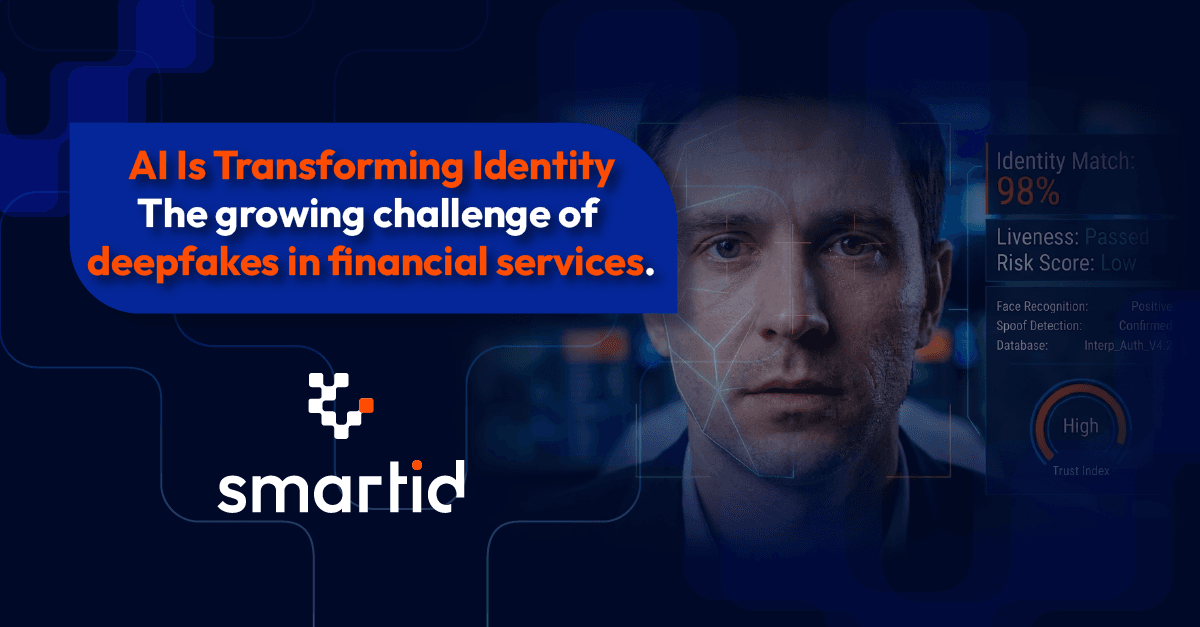
What began as a concern related to disinformation has become a much broader challenge for financial services. Today, deepfakes represent a growing risk to critical processes such as account opening, user authentication, transaction authorization, and identity fraud prevention.
The Problem Is No Longer Disinformation
For years, digital identity verification relied on a relatively simple premise: the evidence presented by the user was an authentic representation of a real person.
Artificial intelligence-based tools allow the generation of facial images, synthetic videos, and other visual elements capable of mimicking human characteristics with increasingly advanced levels of realism. This creates new challenges for digital onboarding processes and for controls that depend exclusively on visual validation.
The Impact on Financial Services
For banks, fintech companies, and organizations operating in digital environments, the primary concern is not just false content. The concern is the possibility of fraudulent identities gaining access to the financial ecosystem from the outset.
Once a false identity bypasses onboarding controls, it can be used to open accounts, conduct transactions, commit financial fraud, or participate in more complex money laundering and account abuse schemes.
For this reason, the risk associated with deepfakes begins long before a suspicious transaction occurs.
Traditional Controls Face New Challenges
Many verification mechanisms were designed to detect altered documents or basic identity inconsistencies.
However, the evolution of artificial intelligence is forcing organizations to strengthen their detection capabilities through additional controls that allow them to assess authenticity, human presence, and risk context.
The combination of advanced biometrics, liveness verification, behavioral analysis, and contextual intelligence is becoming an increasingly important component of modern fraud prevention strategies.
Digital Trust in the Age of AI
As deepfakes continue to evolve, organizations need to rethink how they build trust within their digital channels.
The challenge is no longer just detecting fraud after it happens. It's about reducing the possibility of fraudulent identities entering the system from the very beginning.
Because in an environment where artificial intelligence can generate increasingly convincing evidence, protecting digital trust requires validating much more than just an image or a document.
Stay Ahead of Fraud
Artificial intelligence is transforming both innovation and fraud.